A vector is called 1-dimensional, yet [1, 2, 3, 4, 5] is also a 5-dimensional vector. Dimension has two distinct meanings, and this post untangles both.
A neural network needs data to learn from and a way to score itself: the MNIST dataset, one-hot encoded labels, and the cost function that scores its weights and biases.
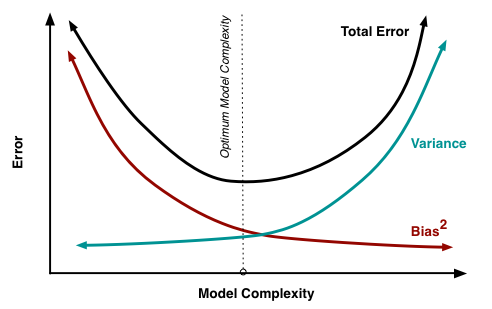
A model's error splits into bias and variance, and reducing one raises the other. Learn underfitting, overfitting, and how to balance them via total error.
A digit classifier's output layer uses 10 neurons, not the sufficient 4. Seeing why means stepping into the network's own eyes to watch how it reads an image.
Zooming out from a single sigmoid neuron to a full network: meet the input, hidden, and output layers, and see why feedforward and recurrent networks differ in one thing.
A perceptron's output flips between 0 and 1, so learning never accumulates. See how the sigmoid neuron's smooth activation turns that cliff into a gentle slope.
Explore the architecture of OpenAI’s in-house Data Agent. Learn how they leverage six layers of context, self-correction, and Evals to analyze 600 PB of data.